When you have completed your graduation University will give you the following documents (Note:- 1-2 documents may vary from university to university but in most cases the documents are same)
List of documents -
- MBBS Degree or diploma
- Academic Transcript
- Character Certificate
- No objection Certificate
- A certificate stating that the course was conducted in English (this is specially required for Bangladeshi students for BMDC so request your university to issue this certificate)
- Police clearance certificate
- Clinical rotation certificate
- MBBS Curriculum
1st step: Once you have received all these documents notarize this document from a recognized notary public from the city where your university is located per document will cost you around 200 RMB (Try to make 3-4 copies of each documents as thiss will come handy in future).
]]>
Every year Chinese Govt. provides scholarship, both full and partial to international students and scholars in different programs, namely bachelor’s degree, master’s degree, PhD and Chinese language program.
This scholarship program is managed by CSC (China Scholarship Council), who carries through with the selection of the scholarship-holder. There are several ways to apply for Chinese scholarships. Usual way is to apply via your country’s education ministry or Chinese Embassy/Consulate, where you have to turn in all the necessary documents.
Eligibility:
1. Applicants must be non-Chinese citizens and be in good health.
2. Applicants must be less than 25 years old for bachelor’s degree, 35 years old for master’s degree and 40 years old for PhD.
Facilities enjoyed by the full scholarship holder:
]]>
Beijing (Peking) University, Beijing:
According to the ranking of Chinese University Alumnus Association (cuaa.net), Beijing University, also known as Peking University and colloquially known as BeiDa (北大) in Chinese, is the topmost school of the country. The university is situated at the northwest of Beijing, in the Haidian district, where many other prominent colleges and universities are also located. The university has as many as 2000 international students studying in the campus, who are provided with multifarious facilities by the school.
]]>
Most recently I’ve noticed an apparent trend on prospective Bangladeshi students seeking the middle kingdom for their further education. Contrary to popular belief, more and more Bangladeshi parents see their children undertaking higher education in China not as unlikely choice rather a practical one. This line of thought is not ‘unusual’ since education in U.S or Europe entails both tremendous expense and social burden on parents supporting the costs of overseas education. Having China, as the next educational destination is not only inexpensive, in addition, could benefit their children with insights on a rising economic superpower with global stretch and influence.
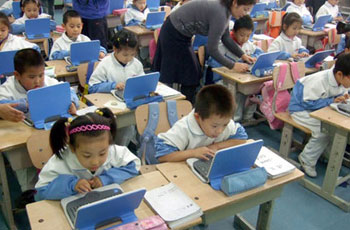
]]>Primary education is a six year course, the usual age of school entrance being 7 years old. Courses taught include geography, mathematics, Chinese; etc. There is also a certain level of elementary political and moral education. A strong emphasis is also placed on Physical Education.